Free Ground Shipping on All Orders – 100% Satisfaction Guarantee

Sign in to like and rate
The Jet Stream is a narrow band of strong winds in the upper levels of the atmosphere, typically found around 30,000 to 39,000 feet above sea level, where commercial jets often cruise—hence the name. These winds blow west to east due to Earth’s rotation and are strongest at the boundaries between cold and warm air masses.
There are two primary jet streams in each hemisphere:
In North America, the polar jet stream is the dominant player in directing weather systems. It acts like an atmospheric conveyor belt, steering storms, influencing temperature patterns, and helping shape seasonal shifts.
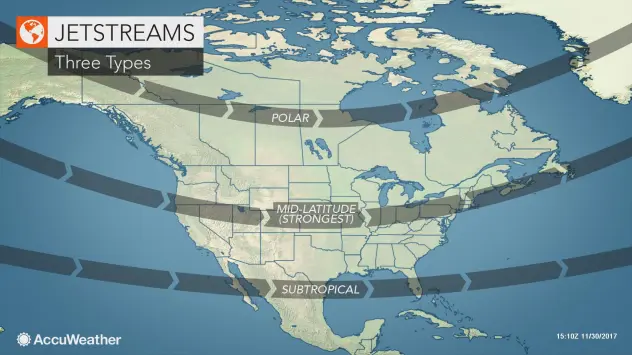
The jet stream forms primarily because of temperature differences between air masses. The greater the contrast in temperature between the cold polar regions and the warm tropics, the stronger the jet stream. This temperature gradient creates a pressure difference, which the atmosphere balances by generating strong, fast-moving winds.
Additionally, Earth’s rotation plays a crucial role. The Coriolis effect—caused by Earth’s rotation—deflects air moving north or south, turning it to the right in the Northern Hemisphere. This results in a west-to-east flow of the jet stream.
Although we often picture the jet stream as a straight, fast-moving river of air, it’s much more dynamic and variable.
The jet stream’s location shifts with the seasons:
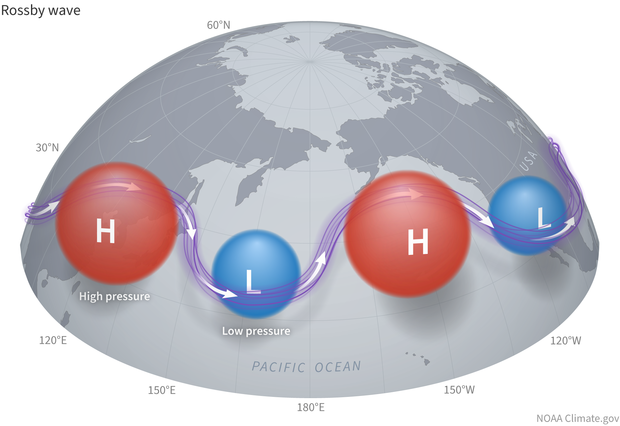
Rather than flowing in a straight line, the jet stream often develops ridges (northward bulges) and troughs (southward dips), creating a wavy pattern. These undulations are known as Rossby waves and they influence how long weather patterns persist over an area.
Sometimes, the jet stream can form blocking patterns, where a high-pressure system gets “stuck” and forces the jet stream to divert around it. This can lead to prolonged periods of heat, cold, or rain in one region.
Recent research suggests that rapid warming in the Arctic, known as Arctic amplification may be weakening the polar jet stream. As the Arctic warms faster than the rest of the planet, the temperature gradient between the poles and the equator lessens. This may cause the jet stream to slow down and meander more, potentially resulting in more persistent and extreme weather patterns.
The jet stream has profound impacts on North American weather, and understanding its behavior is key to long-range forecasting.
The jet stream steers low-pressure systems (storms) and determines where they travel. A southward-dipping jet stream can direct storms across the southern U.S., bringing rain and even snow to regions that are usually dry or warm. Conversely, a northward ridge can push storm tracks into Canada, leaving much of the U.S. dry.
The position of the jet stream separates cold polar air from warmer subtropical air. When the jet stream dips southward in a trough, it can usher in Arctic air, causing cold outbreaks in the Midwest or the South. When it lifts into a ridge, warm air can surge northward, leading to heatwaves even in typically cooler areas.
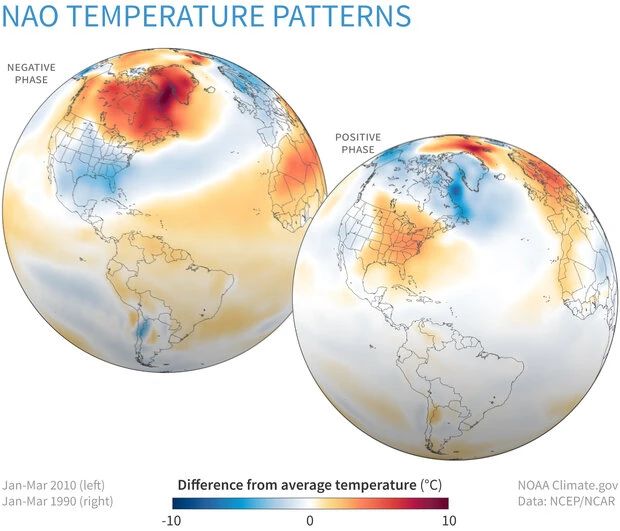
The waviness of the jet stream can lead to persistent weather patterns. For example, if a trough lingers over California, it may bring repeated storms and heavy rainfall. Alternatively, a ridge stuck over the Plains could lead to drought conditions due to prolonged dryness.
Spring and early summer are peak times for tornadoes and severe thunderstorms, particularly in the central U.S. The jet stream provides the upper-level winds necessary for storm development. When it aligns with warm, moist air from the Gulf of Mexico and cool air from the Rockies or Canada, the conditions become ripe for explosive storm development.
The Jet Stream may be invisible to the naked eye, but its effects are felt every day—whether you’re shoveling snow in Chicago, flying across the country, or soaking up the sun in Florida. Understanding the Jet Stream isn’t just academic—it’s critical for weather forecasting, agriculture, disaster preparedness, and even air travel. A meandering Jet Stream can lead to unpredictable, prolonged, or extreme weather, which impacts everything from crop yields to energy consumption and infrastructure planning. So next time the forecast calls for an unexpected cold snap or a surprise warm spell, you can thank—or blame—the jet stream.
Please sign in to post a comment.