Free Ground Shipping on All Orders – 100% Satisfaction Guarantee

Sign in to like and rate
Art has always been a controversial topic when it comes to investment, with some people believing it’s an excellent way to grow your money and others viewing it as a risky option with no guaranteed return. Here are certain factors that should be taken into account.
Artwork needs to be carefully chosen. It must have an intrinsic value beyond a purely financial one.
Do your research. Verifying its origin is critical to its authenticity.
There are associated costs such as framing, storage, and insurance.
Understand the difference between originals, prints/copies, and reproductions as they differ in value.
It should be seen as a long-term investment rather than something that can provide quick returns.
Ultimately, artwork is a unique asset that provides many possibilities for savvy investors who know their stuff. It’s a great way to diversify your portfolio and minimize risk since it doesn’t follow the trends of the stock market. So to keep your investment safe, let’s go over a few tips on how to keep it in great condition.

8 Tips for Storing Artwork
1. Protect Artwork from Moisture
Moisture can easily damage a piece of art, especially if it is a painting or work on paper. If art is stored in a home the temperature and humidity levels should be controlled to reduce the risk of damage. The ideal humidity level for art storage is around 40-60% and the ideal temperature is around 70 °F to 75 °F during summer and 65 °F to 70 °F during winter. Using a hygrometer and or thermometer to measure the inherent moisture and temperature inside an enclosed space is highly recommended.
One of the main reasons why paintings deteriorate is exposure to sunlight, especially direct sunlight. That is due to the chemical reaction of most painting mediums to ultraviolet radiation.
Oil and acrylics can be resilient with minimal exposure, but it is not worth the gamble. The colors in an oil painting can lighten in the sunlight and darken when stored in complete darkness. Watercolor is the most sensitive and can fade fast, as can photos and other works on paper even if encased in UV plexiglass.
3. Store Art in a Cool, Dry, Dark Place
The ideal place to store your art is a cool, dry, and dark place where minimal temperature fluctuations happen. Blackout curtains can be used to cover windows and other sources of light.
4. Do Not Clean Paintings
Because paintings are extremely sensitive to moisture, there is no way to clean them with water and soap, no matter how gentle the cleaning solution is. The most effective way to clean a dusty painting is to use a soft duster with gentle strokes to avoid chipping any cracked paint flakes.
5. Keep Glass or Acrylics Squeaky Clean
Dust glass and acrylic cases regularly so they do not accumulate dirt and grime. If it cannot be avoided, use a gentle glass cleaner with a soft microfiber cloth making sure moisture does not penetrate the frame.
6. Keep Stored Artwork Separated
Storing multiple unframed pieces flat to save storage space is perfectly acceptable. Use a conservation matboard that is at least two inches bigger on each side of the artwork in between each piece to avoid unwanted chemical reactions, acidic damage, and creasing.
7. Do Not Leave Your Art in a Tube
Storing multiple unframed pieces flat to save storage space is perfectly acceptable. Use a conservation matboard that is at least two inches bigger on each side of the artwork in between each piece to avoid unwanted chemical reactions, acidic damage, and creasing. It is not recommended to store paintings rolled inside a tube as it can cause cracking and permanent creasing later. Storing pieces flat is always the best bet if framing and hanging are not going to be immediate.
8. Handle With Care
The natural oil from hands can also damage artwork. Cotton gloves are recommended when handling artwork and will prevent fingerprints that are not fully dried.
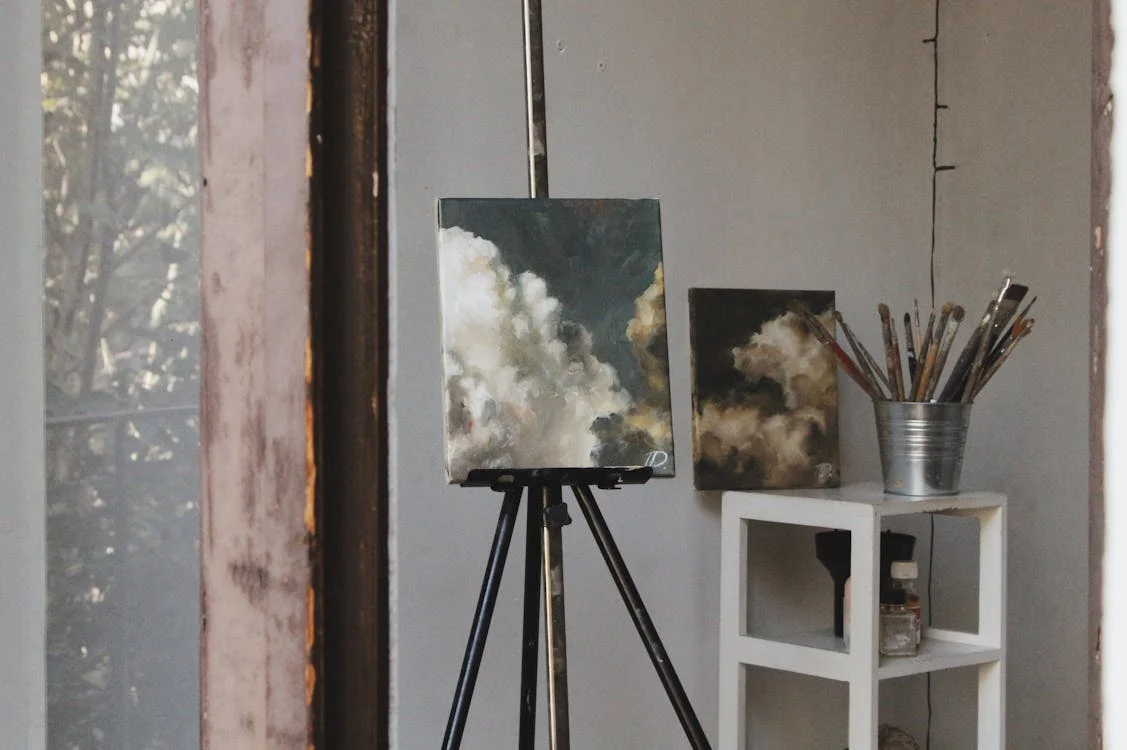
Storing fine art doesn’t have to be a daunting task. With the proper amount of preventive steps, you can ensure that your artwork will stand the test of time. Maximum weather instruments can help play a critical role in keeping artwork from being damaged. Our temperature and humidity instruments can monitor indoor or outdoor conditions to create the perfect storage atmosphere for any artwork, and their timeless and classic design won’t detract from the beauty of any nearby artwork.
Please sign in to post a comment.