Free Ground Shipping on All Orders – 100% Satisfaction Guarantee

Sign in to like and rate
An earthquake is the sudden shaking or trembling of the Earth’s surface caused by the release of energy stored in rocks beneath the surface. This energy travels through the ground in seismic waves, which we feel as shaking. The point underground where the earthquake begins is called the focus (or hypocenter), and the point directly above it on the surface is called the epicenter.
Most earthquakes happen because of movement along faults—fractures in Earth’s crust where tectonic plates meet. The Earth’s lithosphere (its outer shell) is divided into massive plates that float on a softer layer called the asthenosphere. These plates constantly move, but their edges can get stuck due to friction. When enough stress builds up, the rocks break or slip suddenly, releasing energy in the form of seismic waves.
Other causes of earthquakes include:
While earthquakes vary greatly in strength and depth, they can be grouped into several main types:
The most common type, caused by the movement of tectonic plates. These occur where two tectonic plates meet, and there are tree different types. The first is a strike-slip earthquake, when two plates slide past one another in a horizontal movement. Theses commonly occur on the San Andreas Fault in California. The second type is a thrust, or reverse fault, earthquake which occur when one plate is forced over another. The last is called a normal fault earthquake, which occur when two plates pull apart from each other, causing one block to drop down.
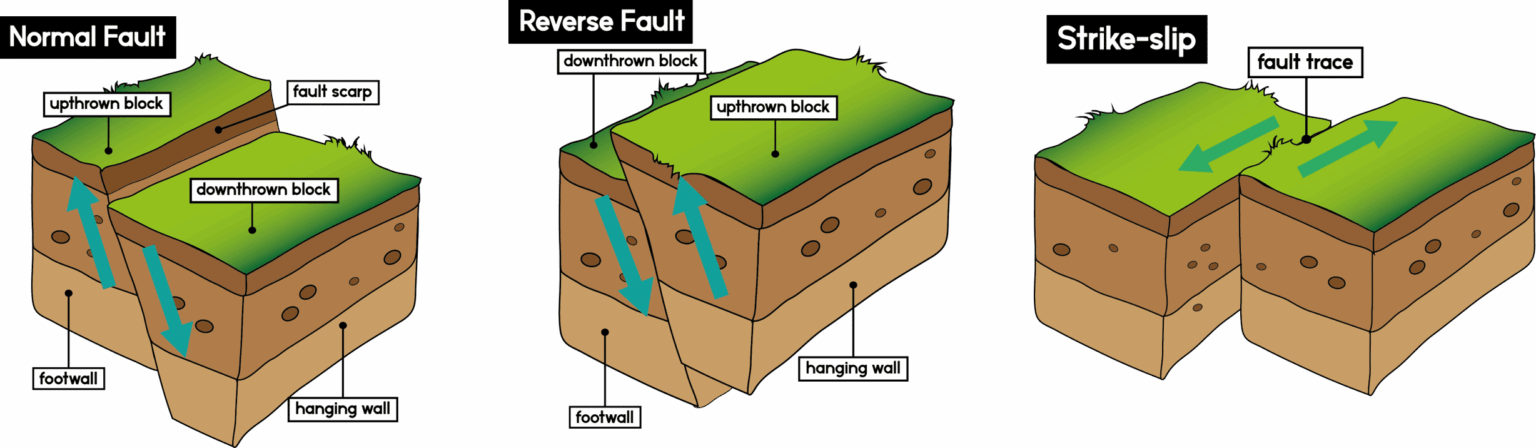
Triggered by volcanic processes, often occurring before or during eruptions.
Small quakes caused by the collapse of underground caves, mines, or large rock formations.
Result from nuclear or chemical explosions—these are human-made and rare.
While earthquakes themselves are powerful, their aftermath can bring even greater hazards. One of the most significant phenomena is tsunamis. These massive waves are usually caused by undersea earthquakes that displace large amounts of water. A strong earthquake in a subduction zone can lift or drop the ocean floor, creating waves that travel across entire oceans.
Other secondary hazards include:
While earthquakes do not directly cause changes in the weather, they can set off natural events that interact with weather systems. For example:
Preparation is the key to surviving earthquakes and their aftereffects:
Earthquakes are the planet’s way of releasing pent-up geological stress. They occur because our planet is constantly moving beneath our feet, and while the shaking itself is dangerous, the chain reactions they set off—like tsunamis, landslides, and volcanic eruptions—can be even more destructive. Understanding what they are and how they work is the first step toward staying safe when the ground starts to tremble.
Please sign in to post a comment.